Frog shaped vessels of the Moche civilization in Peru - collected in Bonn, America

Frog shaped vessels of the Moche civilization in Peru - collected in Bonn, America

The frog shaped vessel is a cultural relic from the Moche civilization in Peru, and is included in the Bonn Collection in the Americas. This unique ceramic vessel, shaped like a frog, not only showcases the exquisite craftsmanship of the Moche people, but also reflects their profound understanding and reverence for the natural world. The Moche civilization is an important cultural period in South American history, known for its exquisite pottery, metal crafts, and murals. This frog shaped vessel is part of the collection of G ö tzVon Houwald, a collector who loves American art. Not only did it provide physical materials for studying the Moche civilization, but it also provided an opportunity for people to appreciate ancient American art.
Cup shaped ceramic container - Bonn Collection of America

Cup shaped ceramic container - Bonn Collection of America

The cup-shaped container in the Bonn Collection of America is a pottery with a unique shape and color. This container is cup-shaped and coated with red and black pigments on the surface, with vivid colors and visual impact. Originating from the Canelo region of Ecuador, it was collected by Erich Wustmann and included in his personal collection. Not only is it a practical drinking vessel, but it also reflects the artistic and cultural characteristics of pottery making in ancient Ecuador. The combination of red and black may be related to local religious beliefs or social customs, reflecting the aesthetic concepts and lifestyle of ancient residents.
Mammalian shaped stirrup pot - Bonn Collection, America

Mammalian shaped stirrup pot - Bonn Collection, America

In the Bonn American Collection, there is a mammalian shaped stirrup pot. The main design of this pot imitates the image of a lying, curled mammal, with a very large stirrup relative to the body and a long neck. The origin of this stirrup pot is not yet clear, it was collected by Teddy Hahn. The stirrup jar is an ancient pottery commonly used to hold liquids such as oil or wine, and its design and production techniques reflect the level of craftsmanship and aesthetic style of ancient civilization. It is not only a practical container, but also a work of art that embodies the creativity and skills of ancient craftsmen.
Camel Ceramic Container - Bonn Collection
Camel Ceramic Container - Bonn Collection

It is a ceramic artwork from the Bonn Collection in the Americas. This vessel features animal shaped decorative elements and a handle decorated with white paintings and five llama patterns. Its exact origin is unknown, but it comes from Johanna Sch ö pp's collection. The llama decoration on this ceramic vessel may be related to the ancient Andean civilization, which has a long history in South America, with the most famous being the Inca Empire. Camels play an important role in local culture, not only as a means of transportation and food source, but also with cultural and religious significance. Due to a lack of detailed information, we are unable to determine the exact origin of this vessel.
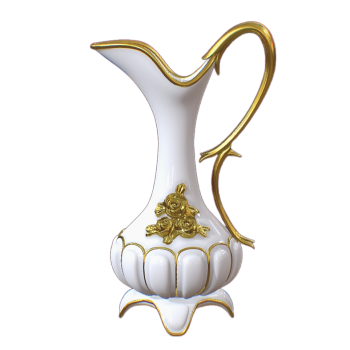
Gold inlaid art vase

Gold inlaid art vase

Ancient American culture humanoid stirrup jar - Bonn Collection, America

Ancient American culture humanoid stirrup jar - Bonn Collection, America

It is a type of pottery in ancient American culture, characterized by a tank shaped like a human, usually with facial features or the entire body shape of a person. Design not only embodies the artistic creativity of ancient craftsmen, but also reflects the profound understanding of human nature, religious beliefs, and daily life in ancient society. They have significant value in archaeology as they provide us with a window to understand the lifestyle and cultural characteristics of ancient civilizations. It is a precious historical artifact in the Bonn Collection of the Americas.
Aribalo Inca cultural pottery

Aribalo Inca cultural pottery

Also known as aryballo, it is a pottery with a unique shape that was widely used in the Inca culture for storing and transporting liquids. Known for its narrow bottom and spherical body, it not only plays an important role in daily life but also holds significant importance in rituals. The design made it easy to carry and pour liquids, and its shape and function were very typical in pottery from the Inca Empire period (approximately 1300-1532 AD). The exquisite craftsmanship of this pottery showcases the Inca people's superb skills in ceramic art. Not only does it exist in Inca culture, but similar pottery forms also exist in ancient Greek culture.
Alabasteron Ancient Greek Pottery - Paul Getty Museum
Alabasteron Ancient Greek Pottery - Paul Getty Museum

It is a type of ancient Greek pottery, named after the Greek word "ἄλαβ στρον", referring to an elongated container with a rounded bottom and a lid at the mouth. The name and shape may originate from Egypt and have the same name as the stone used to make this container. It is usually used to store oils, especially perfume used by women after bathing. This specific Alabasteron was produced in the Attica region and can be traced back to 490 to 470 BC. The scene depicted on the container is a person holding a bow and arrow and an axe, with palm trees in the background. Currently housed in the Paul Getty Museum. It is an important cultural relic for studying the daily life and artistic style of ancient Greece.
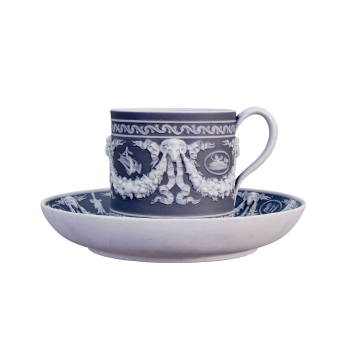
Wedgwood Cup Disc - Cleveland Museum of Art, UK
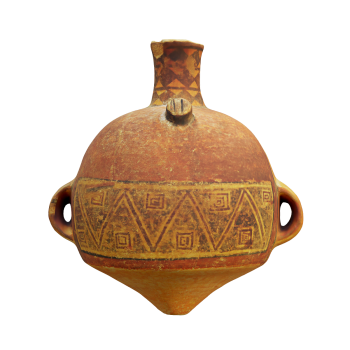
Wedgwood Cup Disc - Cleveland Museum of Art, UK

Produced around 1790 by the Wedgwood factory in England. It is a famous relief decorative style Wedgwood jade porcelain. It was done by Mrs Ms. John Sherwin donated to the Cleveland Museum of Art. Wedgwood jade porcelain is famous for its unique blue and white relief decorations, a style invented by Josiah Wedgwood in the 18th century, a renowned British potter and industrialist. The characteristics of jade porcelain are its hard texture and exquisite relief patterns, which are usually Greek mythology or classical themes.
Late Inca civilization pottery

Late Inca civilization pottery

It is a type of pottery unique to the late Inca civilization, which lasted from approximately 1450 AD to 1552 AD, the peak of the Inca Empire, until the arrival of the Spanish conquerors. Pottery with distinct characteristics, with a spherical or oval body, a pointed bottom, handles or "wings" on both sides, and a wide and flat mouth at the top. The pottery art of the Inca period is famous for its rich colors and exquisite decorations. Decoration usually includes geometric patterns, animal and plant images, or mythological stories, which not only showcase the aesthetic concepts of the Incas, but also reflect their religious beliefs and social values.
Pottery made by Chim ú culture

Pottery made by Chim ú culture

It is a pottery made by the Chim ú culture, dating back to the Intermedio Tard í o period, approximately between 200 and 600 AD. Chim ú culture is an important civilization in the history of the Andean region of South America, known for its exquisite metalworking and large-scale architectural works. The pottery art of this period demonstrated a high degree of technological and artistic achievement, reflecting the political division and cultural diversity of the society at that time. Not only is it a practical daily item, but it is also an important archaeological material for studying cultural and social structures, religious beliefs, and artistic styles.
The "Candy Box" pottery made by Henry Amiro
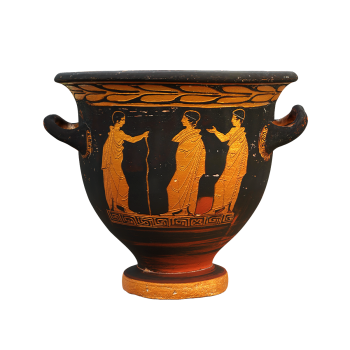
The "Candy Box" pottery made by Henry Amiro

Henri Amiro was a French ceramic artist in the early 20th century, known for his exquisite mold making and decorative ceramics. The work 'Bonbonni è re' (candy box) is a typical representative of the early 20th century, showcasing his artistic style and techniques. It is one of the collections of the Parthenay Museum of Art and History in France. This piece was not glazed, which was very rare at the time. Amiro's work is not only a practical container, but also a sculptural artwork showcasing his artistic talent, reflecting the high level of French ceramic art in the early 20th century.
Attic Red Pottery Bottle - Bonn University Art Museum

Attic Red Pottery Bottle - Bonn University Art Museum

It is a masterpiece of ancient Greek pottery art, currently housed in the Bonn University Art Museum. Known for its unique shape and decorative style, it is characterized by patterns drawn with black or dark brown pigments on reddish brown clay, creating sharp contrasts. It usually has a wide mouth rim and a downward contracting neck, shaped like an inverted bell, hence the name "Bell Ceramic Bottle". In ancient Greece, it was widely used to mix water and wine, and was an indispensable container for banquets and social events. The patterns on the bottle usually depict mythological stories, daily life scenes, or animals, and these intricate paintings showcase the superb skills of ancient Greek artists.
Head shaped Bottle - American Bonn Collection

Head shaped Bottle - American Bonn Collection

The bottle in the shape of a human head belongs to the precious collection of the Bonn Collection in the Americas. Having an swollen spherical body and a slender neck, the neck is ingeniously shaped like a human head. The specific place of origin is not yet known, but this design undoubtedly reflects the imagination and artistry of ancient American civilization in pottery creation. A spherical body may symbolize abundance and vitality, while the shape of a head on the neck may have specific cultural or religious significance, perhaps as a commemoration of ancestors or a representation of mythological figures. As part of the Bonn American Collection, it provides us with important clues for studying ancient American culture and art.
Humanoid pottery - Bonn Collection of the Americas

Humanoid pottery - Bonn Collection of the Americas

The humanoid pottery is a unique artwork in the collection of American cultural relics, held at the Bonn Collection in the Americas. This painted humanoid pottery has a narrow opening and a slender spout. Its exact place of origin is still unclear. This pottery not only showcases the exquisite craftsmanship of ancient American civilization in pottery, but also reflects the artistic expression and cultural understanding of character images in society at that time.
Edward Noerplin's' The Flower Girl '

Edward Noerplin's' The Flower Girl '

This fine porcelain hand-painted flower vase designed by Edward Noerplin was created between 1902 and 1916 and produced in Parthenay, France. Known for its exquisite craftsmanship and color matching. The overall color is pink, with three decorative tubular nozzles at the top. Both sides are equipped with brown handles, and the center is decorated with a relief angel pattern on a white background. The bottom of the flower vase is hollowed out. There are currently two damages, one at the mouth and the other at the bottom. It is currently held in the collection of the Parthenay Museum of Art and History in France.
Long Tongguan Kiln Ceramic Research Institute

Long Tongguan Kiln Ceramic Research Institute

Dragon "is a ceramic artwork collected by the Tongguan Kiln Ceramic Research Institute, showcasing the image of the dragon in traditional Chinese culture with its exquisite craftsmanship and unique design. As an important representative of Chinese ceramic art, Tongguan Kiln is renowned for its long history and exquisite craftsmanship. Cleverly combining the majesty of dragons with the delicacy of ceramics, through the artist's skillful hands, the form, scales, hair and other details of dragons are vividly depicted. The dragon symbolizes power, nobility, and good luck in Chinese culture, and is a symbol of auspiciousness. This artwork is not only a work of art, but also an inheritance of traditional Chinese culture.
Colorful Carving Cup - American Bonn Collection Series

Colorful Carving Cup - American Bonn Collection Series

The colored carved cup is a pottery artwork from the Bonn Collection in the Americas. The body of this cup is decorated with finely carved geometric patterns, using colors such as green, brown, yellow, and blue to showcase rich visual layers and artistic expression. The origin of the cup is still unclear, which adds a touch of mystery to it. It is not only a display of ancient craftsmanship, but also an exploration of color and shape aesthetics.
Colored Pottery Cup - American Bonn Collection Series

Colored Pottery Cup - American Bonn Collection Series

The colored pottery cup with painted face is a colorful pottery item in the Bonn Collection of America. This cup shaped vessel has two vertically mounted handles. The opening edge of the vessel is irregular, with a wreath composed of vertical lines drawn alternately in ochre, red, and black colors. The ochre colored face placed between the two handles is painted with X-shaped eyes and a mouth with a well-defined nose. This face looks clear and cheerful, with wide open eyes, a bean shaped smile, and dimples. The diamond shaped eyes are framed by black C-shaped lines, with prominent eyebrows on top. Belonging to Teddy Hahn's collection.
The Complete Picture of Lanting Yaji Bamboo Tube
The Complete Picture of Lanting Yaji Bamboo Tube

It is an artwork carefully created by Zhang Zongfan, inheritor of Baoqing's intangible cultural heritage of bamboo carving, and his students using bamboo spring carving techniques. Known for its exquisite craftsmanship and profound artistic expression, the "Lanting Yaji" is an important work in the history of Chinese calligraphy, and its content and spirit are cleverly integrated into the carving of bamboo tubes. It showcases the calligraphic charm of Wang Xizhi's "Preface to the Orchid Pavilion" and may also reproduce the scene of literati gathering in the elegant Orchid Pavilion through carving techniques, including the postures, expressions, and surrounding natural landscapes of the characters. The fine texture and vivid details of bamboo spring carving make the entire work full of cultural atmosphere and historical sense
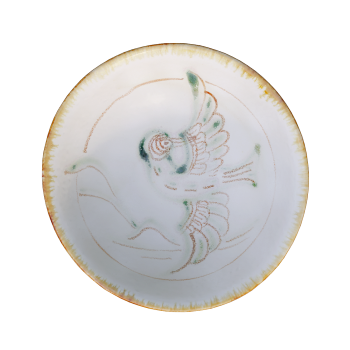
Green glazed brown green colorful flower and bird bowl
Green glazed brown green colorful flower and bird bowl

It is one of the representative works of Tongguan Kiln, carefully created by the famous Chinese arts and crafts master Peng Wangqiu. Tongguan Kiln is a famous ceramic kiln series in Chinese history, renowned for its unique glaze color and decorative art. Master Peng Wangqiu's work showcases the exquisite craftsmanship and profound heritage of Tongguan Kiln ceramic art. With its fresh and elegant blue glaze as the base color, it is painted with brown green flower and bird patterns, with vivid and realistic color contrast. Flower and bird patterns symbolize beauty and harmony in traditional Chinese culture, often used to express longing for a happy life and praise for the beauty of nature.
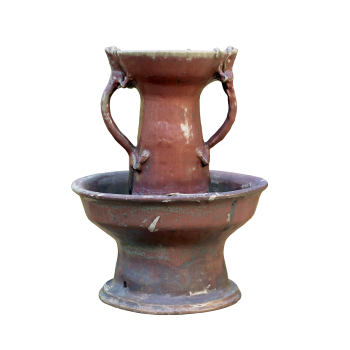
Old Candlestick - Copper Official Kiln

Old Candlestick - Copper Official Kiln

It is a work by Master Hu Wuqiang, produced by Tongguan Kiln and currently collected at Changsha Tongguan Kiln Research Institute. This work showcases the charm of Tongguan kiln ceramic art with its unique design and exquisite craftsmanship. As a representative figure of the Tongguan Kiln, Hu Wuqiang's works often blend traditional and modern elements, showcasing a unique artistic style. An old candle holder is not only a practical lighting tool, but also an artistic decoration. Cleverly combining the functionality and artistry of candle holders, through exquisite ceramic craftsmanship, the traditional form of candle holders is combined with modern aesthetics, presenting a quaint and elegant beauty.
Lion candle holder

Lion candle holder

The outstanding works of Chinese arts and crafts master Hu Wuqiang were carefully crafted by Changsha kiln. The clever combination of the majestic image of lions and the practical function of candlesticks showcases the unique charm and profound cultural heritage of Chinese ceramic art. With its exquisite craftsmanship and profound understanding of traditional culture, this lion shaped candlestick was created. Lions symbolize majesty and strength in Chinese culture and are often used as totems for protection and decoration. Not only does it give people a strong artistic impact visually, but it also conveys a positive and uplifting spirit culturally. Changsha kiln, as an important representative of Chinese ceramic art, is renowned for its long history and exquisite craftsmanship.
Arhat ceramic art with bird

Arhat ceramic art with bird

Arhat Bird Riding is a ceramic artwork created by Master Liu Zizhen, the first generation of "clay figurine Liu" in the Tongguan Kiln in Changsha, China, in the 1980s. Liu Zizhen, known as the "clay figurine Liu", is a famous Chinese ceramic art master known for his exquisite skills and profound understanding of traditional ceramic art. His works not only embody the traditional craftsmanship of the Tongguan kiln, but also incorporate his personal artistic style and innovative spirit. With its vivid shape and fine workmanship, it shows the shape of Arhat holding a bird, implying the idea of harmony and natural coexistence. In Buddhism, Arhat is the symbol of a person who has achieved spiritual accomplishment, while birds often represent freedom and peace.